
Navigating the process of obtaining an Emotional Support Animal (ESA) letter can be confusing, especially with the amount of misleading information available online. Many websites promote products that appear official but have no legal standing under federal housing law. Understanding what is — and is not — recognized can help individuals avoid unnecessary costs and protect their housing rights.
Official Pets focuses on education, transparency, and connecting individuals with independent, state-licensed healthcare providers who can evaluate whether an ESA is clinically appropriate and issue proper documentation when warranted.
The Truth about ESA Certification
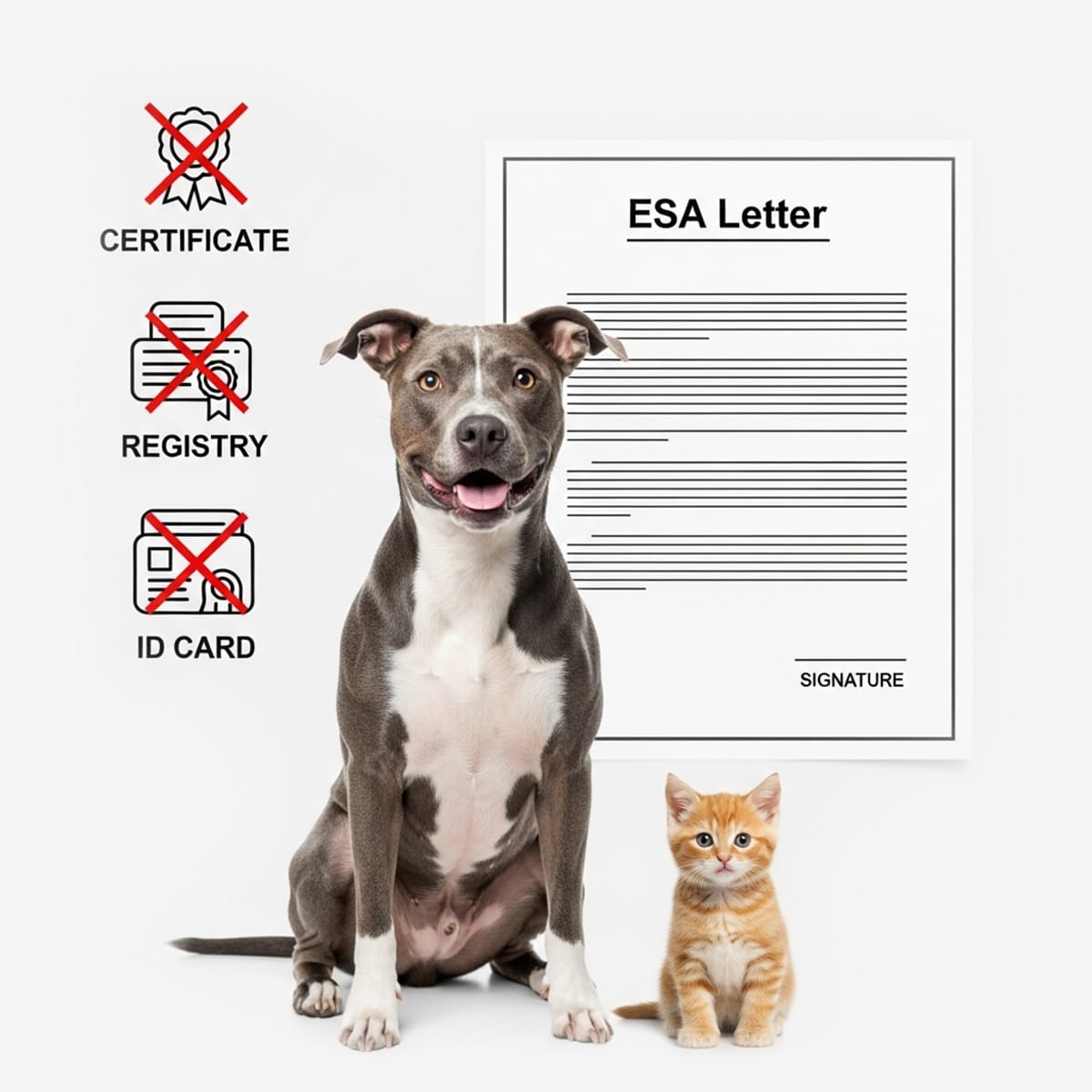
There is no legally recognized certification, registry, or database for Emotional Support Animals. Products such as ESA certificates, ID cards, or registrations are not required under federal law and do not establish legal ESA status.
Under the Fair Housing Act (FHA), housing providers do not evaluate an animal’s registration or certification. Instead, they review whether an individual has a disability-related need for an emotional support animal, supported by documentation from a licensed healthcare provider. Submitting unofficial documents or purchased registrations may result in a denied accommodation request.
HUD Guidance on ESA Registries and Online Claims
The U.S. Department of Housing and Urban Development (HUD) has issued clear guidance cautioning individuals against websites that sell ESA registrations or certifications. There is no federal or state-recognized ESA database.
Housing providers rely on documentation from a licensed healthcare professional who has conducted a clinical evaluation and determined that an emotional support animal is appropriate as part of a reasonable accommodation request. Other materials marketed online do not replace this documentation.
What ESA “Certification” Actually Refers To
The word “certify” is commonly used online, but it is often misleading. Federal housing law does not recognize any formal ESA certification process. What matters is whether an individual has documentation from a licensed healthcare provider confirming a disability-related need for an emotional support animal.
A valid ESA letter generally confirms that an individual has a qualifying mental or emotional health condition, that the presence of an emotional support animal helps alleviate one or more symptoms of that condition, and that the documentation meets the requirements of the Fair Housing Act. To be considered valid, the letter must come from a licensed healthcare provider who has evaluated the individual and must include appropriate professional credentials and licensing information.
Accessing ESA Care Through Remote Services
Remote evaluations can improve access to mental health services for individuals who face mobility limitations, scheduling challenges, or limited availability of specialized providers in their area.
Some local clinicians may not offer ESA evaluations because they do not specialize in animal-assisted intervention or are unfamiliar with HUD documentation standards. This does not invalidate an individual’s need; it simply reflects differences in provider scope and experience.

Are Remote ESA Evaluations Legally Valid?
HUD guidance allows ESA documentation to be issued following a legitimate clinical evaluation, including those conducted remotely, as long as the evaluating professional is properly licensed and follows applicable state and federal guidelines.
An ESA letter issued after a valid remote assessment carries the same legal weight as one issued following an in-person visit. This flexibility allows individuals to seek care from providers who understand reasonable accommodation requirements while balancing work, school, and family responsibilities.
How Official Pets Supports the ESA Process
Official Pets helps make the ESA process clear, accessible, and easy to understand. We connect individuals with independent, state-licensed healthcare providers who conduct ESA evaluations with care and determine whether an ESA letter is clinically appropriate. These providers are experienced in proper documentation standards, while our role is to support clients with clear information, helpful resources, and a smooth experience from start to finish.
With accurate guidance and legitimate documentation, individuals can feel more confident when requesting housing accommodations related to their emotional support animal. Official Pets is here to provide clarity and peace of mind throughout the process.
How It Works

Complete a Service Request Form
Fill out our service request form for an
ESA Letter. It’s quick, easy, and confidential.

Connect With Your Licensed Therapist
A Licensed Healthcare Provider will contact you to complete your ESA Evaluation. You can choose to connect via phone or video call, whichever suits you best.
Receive an Letter
If the provider determines you qualify after your evaluation, your letter will typically be delivered digitally within 24–48 hours of that determination. Expedited service is available for urgent requests.